If AI Can Make Anything, What's Art Worth? — Why Aesthetics Still Can't Be Automated
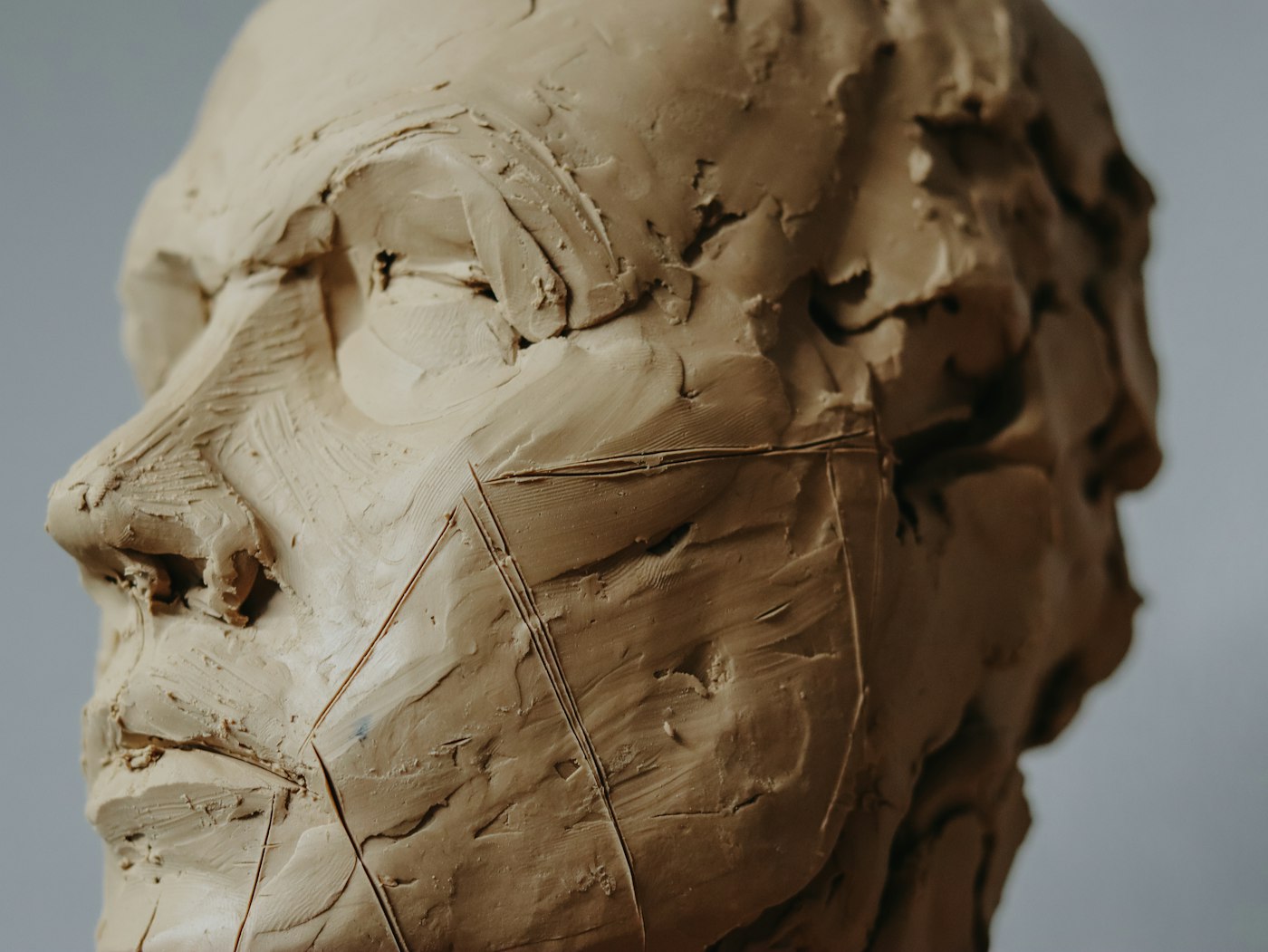
Type a prompt, get a painting. Describe a mood, get a poem. Ask for a candle design, get fifty variations in ten seconds. We're living in an era where AI can produce visual output faster than you can describe what you want — and that raises an uncomfortable question for anyone who makes things by hand: is creativity becoming cheap?
It's a fair question. But it's also the wrong one. Because creativity was never about the ability to produce. It was always about the ability to choose. And that distinction matters more now than ever.
What AI Actually Does Well (Let's Be Honest)
This isn't going to be one of those pieces that dismisses AI to make human artists feel better. AI is genuinely extraordinary at certain things:
Speed. An image generator can produce a hundred visual concepts in the time it takes a human to sketch one. That's not a metaphor — it's a measurable fact.
Range. AI can work in Art Deco, photorealism, ukiyo-e, and Memphis Style in the same afternoon. A human artist would need years to develop fluency in each.
Iteration. Don't like the result? Adjust the prompt and try again. The cost of a bad attempt is nearly zero.
These are real capabilities, and they're already changing how visual content gets made. Stock photography, graphic design templates, product mockups — these are domains where AI's speed-to-quality ratio is hard to beat.
So if you're in the business of making things that are primarily visual, the pressure is real. But here's where the story gets more interesting.
The Gap: AI Generates, But It Doesn't Judge
There's a fundamental difference between producing options and knowing which option is right. AI can give you a hundred candle designs. It cannot tell you which one will make someone stop walking in a store and pick it up. It cannot tell you which silhouette, when cast as a real three-dimensional object in wax, will have the kind of presence that makes you want to keep it on a shelf long after the wick is spent.
This is the gap, and it's not a small one. It's the difference between volume and value.
Aesthetics — real aesthetic judgment — is not pattern recognition. It's a convergence of three things that AI cannot currently replicate:
1. Cultural depth. Knowing that a particular shade of amber reads as warmth in Scandinavian design culture but as mourning in certain East Asian contexts isn't data you can train into a model with enough examples. It requires lived cultural understanding — the kind that comes from growing up inside a visual language, not just cataloging its outputs.
2. Sensory crossover. A candle is not a visual object. It's a multisensory experience: the way the color of the wax suggests the fragrance before you even light it, the way the texture of a hand-sculpted surface catches light differently from a molded one, the way the weight of it in your hand tells you something about its quality. AI operates in pixels and text. It has no sense of smell, no sense of touch, no sense of how these senses interact in a person experiencing a physical object.
3. The courage to leave things out. This might be the most important. Good taste is largely about restraint — knowing what not to add. AI, by its nature, tends toward the maximal. Give it a prompt and it will fill every pixel with detail, because it was trained to produce outputs that look "complete." A human artist knows that sometimes the most powerful design decision is the empty space, the single color, the form that does less and means more.
The Value Shift: From Production to Curation
Here's the paradox of AI and creativity: by making production cheaper, AI doesn't make creativity worth less. It makes the judgment behind creativity worth more.
Think about it this way. Before the printing press, the ability to copy a manuscript by hand was valuable. After the printing press, that skill became commoditized. But did writing become less valuable? No — the ability to write something worth printing became more valuable, because the cost of distributing bad writing dropped too, and the market was suddenly flooded with it. What became scarce wasn't the ability to produce text; it was the ability to produce text worth reading.
We're at a similar inflection point with visual and design work. AI can generate a thousand variations of anything. That means the market is about to be flooded with visual content — most of it competent, some of it impressive, very little of it meaningful. The scarce resource is no longer the ability to make something look good. It's the ability to decide what good looks like — and to hold that line against the temptation to add more, change more, optimize more.
In a world of infinite creative output, curation is creation.
What This Means for Handmade Art
For handmade objects — sculptural candles, artisan figures, small-batch creations — the AI era isn't a threat. It's a clarifying force.
When anyone can generate a "candle design" with a text prompt, what distinguishes a real candle? It's not the shape. AI can generate shapes. It's not the color. AI can generate colors. It's the decisions that went into making it — the specific wax formulation chosen for its burn behavior and scent diffusion, the hand-shaping that makes every piece subtly different, the knowledge that a human looked at this object and decided, in that moment, that this particular curve and this particular texture and this particular weight were right.
At SLASHEE, we use our F-Model 1.0 wax formulation not because it's "advanced" in some technical sense, but because we judged it to be the best way to express what a candle can be — durable without being rigid, fragrant without being overwhelming, clean-burning without sacrificing warmth. That's a series of aesthetic decisions, not algorithmic outputs. Every sculptural candle we make has slight variations from the one before it, and those variations aren't defects. They're evidence that a human hand was involved — that someone made a choice, in real time, about how this particular piece should feel.
AI can propose a hundred candle silhouettes. It cannot choose the one worth sculpting by hand.
The Future: Not Faster, But More Intentional
The question "is creativity becoming cheap?" assumes that creativity is measured by output volume. It never was. A novelist who writes one great book is more creative than one who writes fifty mediocre ones. A candle maker who develops one extraordinary formulation is more creative than one who cranks out a hundred variations of the same product.
AI is forcing us to be honest about what creativity actually is. And the answer turns out to be the same as it always was: it's not about making more. It's about making what matters.
The artisans, the designers, the makers who will thrive in the AI era aren't the ones who try to out-produce the machines. They're the ones who lean into what machines can't do — make aesthetic judgments rooted in culture, craft objects that engage multiple senses, and exercise the restraint to leave things out when everything around them is screaming to add more.
Creativity isn't getting cheaper. The bar is just getting clearer. And for those willing to meet it — not with more output, but with better judgment — the value of what they make has never been higher.
Explore hand-sculpted candles and artisan creations at slashee.tech.