What Products Are Actually Worth 3D Printing for Prototyping?
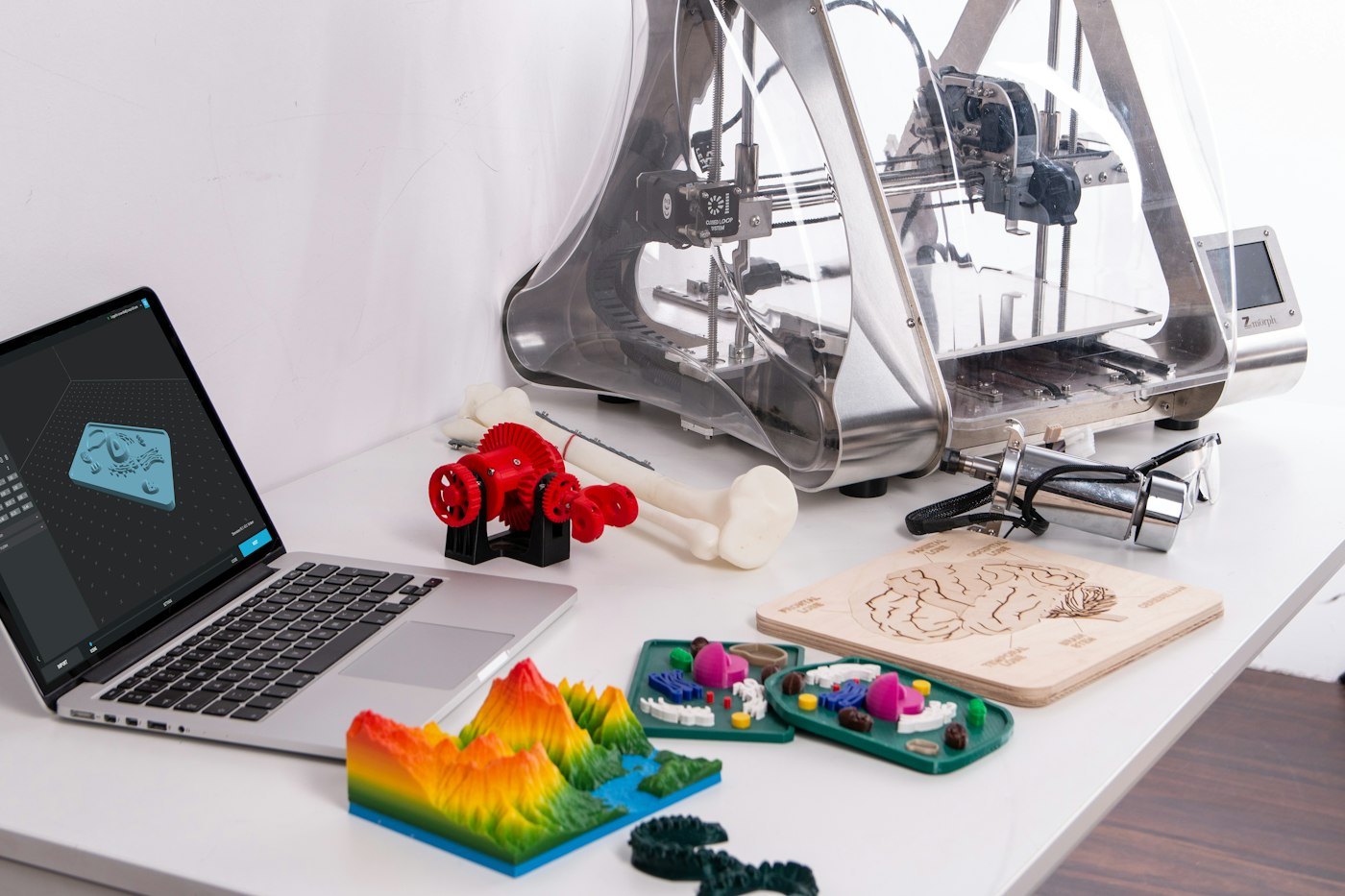
Every product starts as an idea. The challenge is getting from idea to something you can hold in your hands without spending a fortune or waiting months.
For decades, the path was clear: sketch, prototype with CNC or soft tooling, fix what breaks, and repeat. That still works for some products. But it is slow, expensive, and punishes early mistakes.
3D printing changed the game. It lets you turn a digital file into a physical object in hours or days, without custom tooling. But here is the part people often miss: 3D printing is not the best choice for every product.
Knowing where it wins — and where it does not — can save you time, money, and a lot of frustration.
When 3D Printing Becomes the Obvious Choice
3D printing shines when the value is in the shape, not the process.
If your product has complex geometry, organic curves, internal channels, or fine surface detail, traditional machining often becomes expensive or impossible. A 3D printer does not care how complicated the shape is. It builds layer by layer, so complexity does not always cost more.
That makes it ideal for early-stage prototypes where you are validating appearance, fit, or form. You are not committing to a mold. You are not paying a machine shop to set up fixtures. You are just printing the part, holding it, learning from it, and iterating.
Product Categories That Fit Best
Here is where 3D printing for prototyping makes the most sense.
1. Design-driven consumer goods
Think figurines, collectibles, home decor, and lifestyle accessories. These products are judged first by how they look and feel. A 3D-printed prototype lets designers and stakeholders evaluate proportions, surface quality, and overall aesthetics before any tooling money is spent.
2. Custom and personalized items
Jewelry, gifts, branded merchandise, and personalized accessories are perfect candidates. Each piece may differ slightly, and quantities are often small. 3D printing handles variation easily, which is something mass manufacturing struggles with.
3. Functional assemblies and mechanical parts
Housings, brackets, connectors, and enclosures can be printed to test assembly, tolerance, and ergonomics. You can discover fit issues early, before expensive molds are cut.
4. Packaging and display prototypes
Brands often need a physical sample of packaging or a retail display to test shelf presence. 3D printing creates those samples quickly, without needing a production line.
5. Low-volume product variants
If you are launching a limited edition or testing multiple versions of a product, 3D printing lets you produce several designs without committing to one.
The Hidden Advantage: Speed and Iteration
The real power of 3D printing is not just that it is fast. It is that it makes iteration cheap.
A designer can print a prototype on Monday, spot a flaw on Tuesday, adjust the file, and print again on Wednesday. That kind of loop is impossible with injection molding or CNC tooling. Each round of traditional prototyping can take weeks and thousands of dollars. With 3D printing, the cost of trying again drops dramatically.
That freedom changes how products are developed. Teams take more risks. They test more ideas. They arrive at better designs faster.
Where 3D Printing Falls Short
It is equally important to know when 3D printing is not the right tool.
Very large parts can be expensive or require specialized printers. Parts that must withstand high mechanical loads, extreme temperatures, or strict regulatory standards may need materials and processes that desktop 3D printing cannot provide. And if you need tens of thousands of identical units, injection molding will almost always be cheaper per piece.
The goal is not to replace traditional manufacturing. It is to use 3D printing where it adds the most value — early, often, and before big commitments are made.
How SLASHEE Approaches Prototype Printing
At SLASHEE, we specialize in the prototypes that others call too detailed, too fragile, or too complex.
Our process is built around three things:
Capillary support technology that removes cleanly from intricate designs
Gradient curing that balances speed with surface quality
A three-step post-processing workflow that delivers results ready for photography, testing, or presentation
We start at 10 pieces, which makes us a practical choice for designers, indie brands, and small studios who need reliable prototypes without factory-level minimums.
A Better Way to Test Your Ideas
3D printing is not a magic solution. It is a strategic tool. It works best when the product is complex, the quantities are low, and the timeline is tight.
If your design depends on fine detail, unique form, or fast iteration, 3D printing for prototyping is probably the smartest place to start. It gives you something real to hold, test, and refine — before you ever need to think about molds, tooling, or mass production.
The best products are not designed in a single step. They are discovered through building, testing, and improving. 3D printing simply makes that discovery faster and more affordable.
Ready to prototype your next product? Visit slashee.tech and see how our 3D printing process brings complex ideas to life.